





































At the Google Cloud Security Summit 2025, the company unveiled a series of new capabilities designed to secure AI initiatives and strengthen protection for organizations deploying agentic AI.
The announcements expand the functionality of Google Cloud’s Security Command Center, introducing advanced protections for AI agents built in Google Agentspace and Agent Builder.
Google emphasized that AI presents an unprecedented opportunity for enterprises to enhance their security posture.
By proactively detecting zero-day vulnerabilities, rapidly analyzing vast amounts of threat intelligence, and automating routine security tasks, AI is already enabling teams to achieve levels of efficiency and defense that were previously unattainable.
Yet, as AI agents continue to be adopted across diverse environments, Google underscored that securing them has become a top priority.
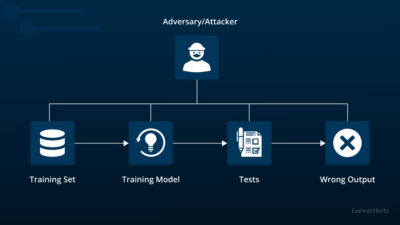
The company pointed to its existing AI Protection features within Security Command Center, which already include Sensitive Data Protection to identify and redact confidential information that could otherwise expose systems to data poisoning.
Additionally, Model Armor, another key feature, provides safeguards by screening interactions between agents, tools, and Model Context Protocol (MCP) servers, reducing the risks associated with prompt injection and tool poisoning.
Building on these foundations, Google introduced several new advancements. Security teams will soon gain access to expanded AI agent inventory and risk identification features, enabling automated discovery of AI agents and MCP servers.
This will allow organizations to better identify vulnerabilities, misconfigurations, and risky interactions across their AI ecosystems. The company is also extending the protections of Model Armor to Agentspace prompts and responses, a capability now available in preview.
This enhancement offers real-time safeguards against runtime threats, including jailbreaking, prompt injection, and sensitive data leakage. To further strengthen governance, Google is rolling out specialized posture controls for AI agents in both Agentspace and Agent Builder, designed to help organizations enforce security policies and maintain compliance with internal standards.
In parallel, Google announced the addition of new threat detection capabilities for AI agents within Security Command Center. Leveraging frontline intelligence from Mandiant and Google’s broader security research, these detections are designed to help enterprises identify anomalous or suspicious behaviors across agent assets and respond quickly to external threats.
By expanding both protective and detective controls, Google is aiming to provide a more comprehensive security framework for AI-driven environments.
With these updates, Google has positioned itself as a leader in addressing the emerging risks of AI adoption. The company’s strategy emphasizes not only safeguarding AI agents and data but also leveraging AI itself to advance the speed, precision, and resilience of enterprise security operations.